

The chemical industry adopts a wide range of filling equipment tailored to diverse production scenarios. Equipment selection is primarily determined by the physical properties of raw materials, including liquid state, powder form, high-viscosity paste and other textures, as well as core production indicators such as filling precision, explosion-proof requirements and production capacity. Common equipment types include gravimetric filling machines, powder filling machines and full-automatic filling production lines, covering semi-automatic and fully automatic liquid filling equipment, vacuum sauce filling machines, automatic tube filling and sealing machines, and special cosmetic tube filling machines.
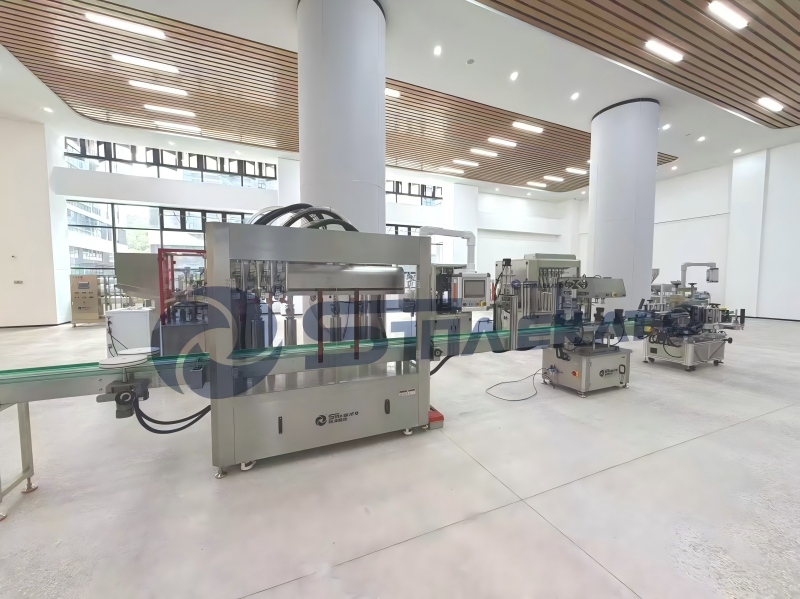
Strict compliance with the following standardized operating specifications and safety guidelines can effectively ensure stable and safe equipment operation, extend the service life of filling machines, maintain consistent product quality, and avoid equipment failures, production downtime and economic losses caused by irregular operations.
Mandatory Universal Safety Precautions
Authorized Professional Operation Only: Equipment operation, parameter setting, installation and maintenance work must be completed by professionally trained and certified staff who are fully familiar with the equipment’s operating principles and potential safety risks.
Strict LOTO Power Isolation Protocol: Lock Out/Tag Out (LOTO) procedures are mandatory before all cleaning operations, nozzle replacement, fault troubleshooting and equipment maintenance. The specific operation standards are as follows:
1. Completely cut off the main power supply of the equipment;
2. Isolate the pneumatic pressure source and fully exhaust the residual air in the air pipeline;
3. Install personal safety locks and warning tags at all isolation points to prevent accidental power-on and equipment activation.
Standard Personal Protective Equipment (PPE): Operators must wear matching protective supplies during operation, including safety goggles, chemical-resistant protective gloves (for liquid material processing) and closed-toe work shoes. For high-noise working environments, noise reduction ear protection equipment is also required.
Complete Safety Protection Devices: It is forbidden to start and run the equipment after removing, disabling or bypassing safety guards, safety interlocks and light curtain protection devices. These protective structures are designed to prevent personal injury caused by contact with moving parts such as conveyors and cylinders, as well as material splashing hazards.
Pre-Operation Inspection and Setup Specifications
Material and Equipment Compatibility Confirmation: Verify that the equipment body, wetted components including seals, hoses and storage tanks, and filling nozzles are fully compatible with the processed materials. Comprehensive assessment shall be conducted on chemical adaptability, material viscosity, abrasion resistance and particle size characteristics. The use of mismatched accessories will easily lead to material contamination, equipment corrosion and component damage.
Stable Installation Environment: The filling machine must be installed on a solid and horizontal base. A stable installation foundation can effectively reduce equipment vibration, avoid structural deviation and ensure accurate filling measurement.
Power and Air Supply Inspection: Check whether the voltage, phase number and frequency of the on-site power supply conform to the equipment’s rated parameters. Meanwhile, confirm that the compressed air supply is clean, dry and maintained within the stable pressure range specified in the official manual.
Mandatory Pre-Production Calibration: Factory default parameters cannot be directly used for formal production. Before the first production operation and after each product switching, full calibration must be carried out with actual materials and production containers. Weight-type filling equipment shall be calibrated with standard calibrated scales, and volumetric filling equipment shall be verified with graduated measuring cylinders.
In-Production Operation and Quality Control Standards
Standardized Parameter Configuration: Accurately set core operating parameters such as filling volume, filling weight and operating speed, and reasonably set drip-proof delay parameters. It is necessary to balance production efficiency and filling accuracy, as excessive pursuit of operating speed will lead to reduced filling precision. Meanwhile, establish parameter files for different products and container models for unified management.
Unified Container Specifications: The equipment calibration data is applicable to specific container shapes, self-weight and nozzle caliber. Large deviations in container specifications will directly cause filling errors. Therefore, containers with unified and standard specifications must be used in continuous production.
Regular In-Process Sampling Inspection: Formulate a regular detection mechanism during production, and conduct random sampling inspection of filling weight or volume every 15 to 30 minutes. Timely discover and fine-tune minor parameter deviations to ensure stable product filling accuracy.
Ambient Environment Monitoring: Keep an eye on on-site environmental conditions. Severe temperature changes will affect the viscosity of liquid materials and the operating stability of pneumatic systems, which will further lead to inaccurate filling data.
Equipment Cleaning, Switching and Daily Maintenance Guidelines
Standardized Cleaning Procedures: Clean the equipment in strict accordance with documented and verified cleaning processes. For food, pharmaceutical and chemical production scenarios, standardized cleaning is the key to avoiding material pollution and cross-contamination between different batches of products.
Specified Cleaning Agents Only: Only use cleaning and disinfecting reagents officially approved by the equipment manufacturer. Unqualified chemical agents will cause corrosion and aging damage to equipment seals, hoses and precision sensors.
Anti-Leakage Cleaning Operation: Do not flush the equipment directly with high-pressure water or steam, especially for electrical control panels, motors, sensors and valve components. Clean the equipment surface with damp soft cloths and special cleaning tools to prevent liquid from penetrating into precision parts.
Strict Preventive Maintenance Plan: Avoid passive maintenance after equipment failure. Follow the manufacturer’s official preventive maintenance schedule to complete regular lubrication, seal integrity inspection, filter replacement and component wear detection, and establish complete maintenance records.
Important Reminder
The above contents are universal safety and operation guidelines for filling machines. The official equipment operation and safety manual provided by the manufacturer shall serve as the primary production reference standard. In case of any operational doubts or abnormal equipment conditions, stop the machine immediately and consult the official manual or professional and qualified technical personnel.
Post time: Jul-22-2026


