

Small‑to‑medium manufacturers across cosmetics, pharmaceuticals, food and specialty chemical sectors continue to rely on mature semi‑automatic ultrasonic tube filling and sealing equipment for flexible, cost‑effective soft‑tube production. Well‑established on the market, this machine balances moderate throughput, reliable sealing quality and accessible operation for factories handling plastic and aluminium‑plastic laminated tubes for creams, ointments, gels and other fluid or paste‑form products.
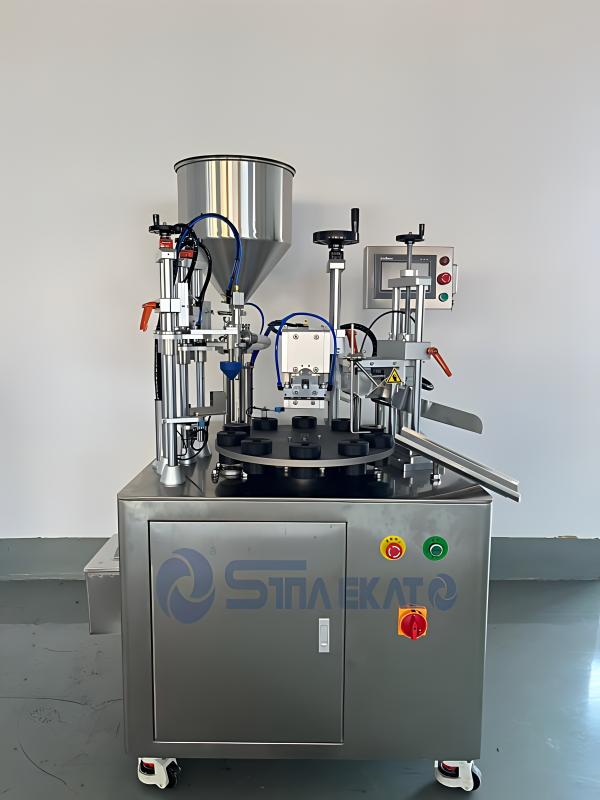
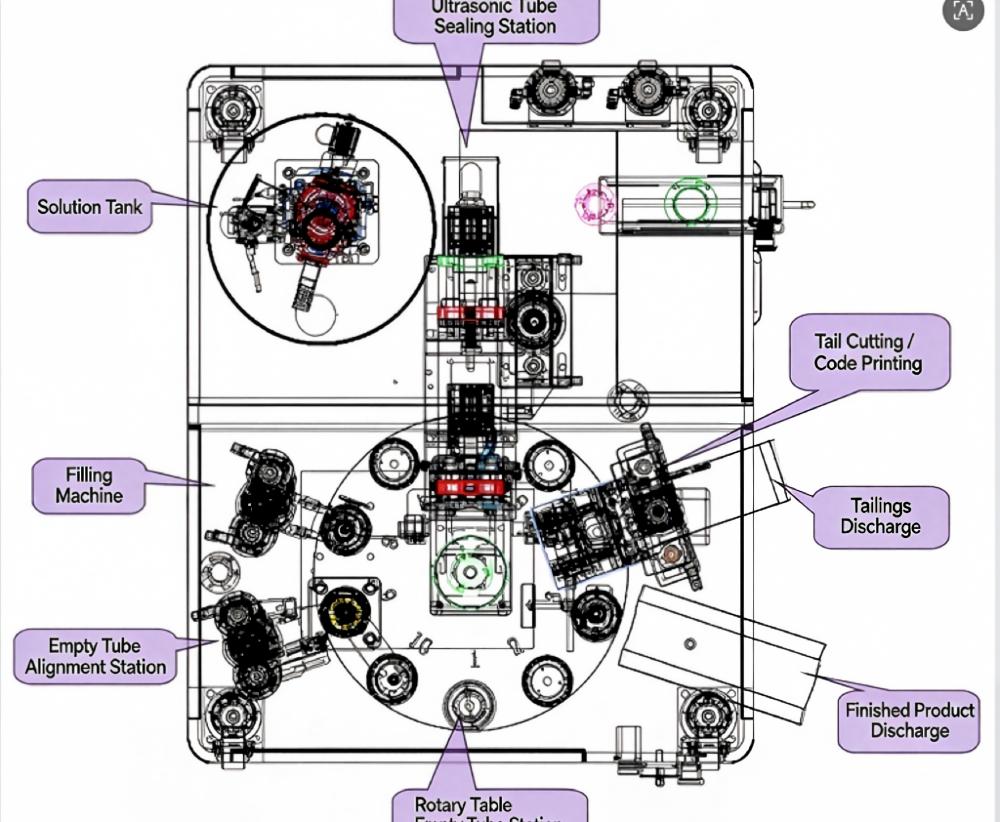
The unit adopts a rotary turntable‑driven workflow. Operators manually place empty tubes onto stations of the rotating turntable. Subsequent steps run automatically: colour‑mark detection and motor‑driven tube orientation align printed graphics accurately, followed by piston‑based filling, cylinder‑driven tube clamping, ultrasonic sealing, tail‑waste trimming, coding and finished‑product ejection and discharge. Human intervention is limited to tube loading, which cuts overall labour intensity while avoiding the high capital outlay of fully‑automatic production lines. Controlled by PLC and equipped with a touch‑screen human‑machine interface, the machine requires only brief staff training for routine operation and parameter adjustment. Its digital auto‑frequency‑tracking ultrasonic electric box guarantees stable sealing performance across long production runs at 20 kHz working frequency.
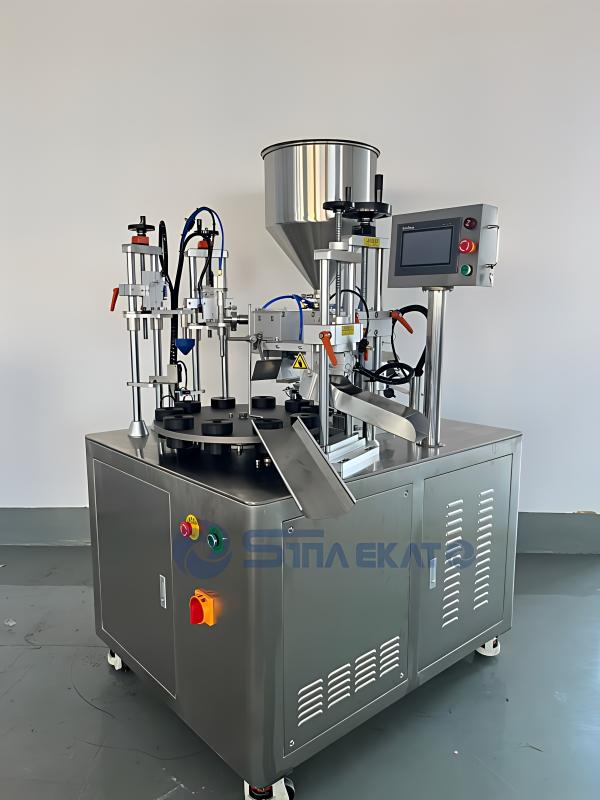
In terms of core performance data, the machine delivers 20‑23 finished tubes every minute. Filling accuracy stays within ±1 %, a critical index for pharmaceutical and cosmetic batches where consistent dosage must be maintained. It supports tube diameters of 13‑50 mm and sealing heights from 50 mm to 200 mm. Filling volume covers multiple ranges: 6‑60 ml, 10‑120 ml and 25‑250 ml to match diverse product specifications. Working air pressure requirement stands at 0.5 Mpa with total power consumption of 2.6 kW. Constructed mainly from 304‑grade stainless steel, the 350‑kilogram machine measures 1000 mm ×1100 mm ×1600 mm and carries a 40‑litre material hopper for paste and liquid feeding.
Key components are sourced from proven international and domestic suppliers: Panasonic photo‑electric eyes for colour‑mark alignment, Omron relays, Leadshine stepper motors, SICK and Autonics proximity sensors, Airtac pneumatic cylinders and solenoid valves, Delta frequency converter and high‑precision cam indexers. Reliable component selection helps reduce downtime for small‑batch and mixed‑SKU production, a common scenario among growing consumer‑goods manufacturers.
Industry analysts note that semi‑automatic tube‑processing machines maintain steady market demand because many producers need production flexibility rather than maximum speed. For cosmetic workshops, pharmaceutical contract manufacturers and food enterprises running frequent formula or tube‑format changes, this equipment enables quick tooling and parameter adjustments without heavy reconstruction of workshops. Clean, neatly‑trimmed tube seals with optional tail‑end coding also upgrade finished‑product appearance and shelf competitiveness.
While high‑speed fully‑automatic lines dominate large‑volume mass‑production sites, this proven semi‑automatic filling‑sealing solution still fills an important market niche. It offers an economical pathway for businesses to stabilise tube‑packaging quality, raise output and lower defect rates, especially for enterprises in pilot‑batch testing and medium‑scale manufacturing.
Post time: Nov-28-2026


